28-Day Sanctuary · Session 21
The Light Within
Session 21 of the free Light of Dharma contemplative journey, combining Buddhist wisdom, daily-life reflection, and a gentle practice.
Welcome back, traveler. Take a comfortable seat, soften your shoulders, and rest your hands gently on your lap. Let us take a slow, nourishing breath together.
Over the last two days, we have mapped the terrain of the physical body ($Kāyānupassanā$) and isolated the raw flavors of our sensations ($Vedanānupassanā$). Today, we move into the third foundation of mindfulness, stepping directly into the control room of our entire existence: $Cittānupassanā$, or Mindfulness of the Mind.
Day 21: Mirroring the Mind
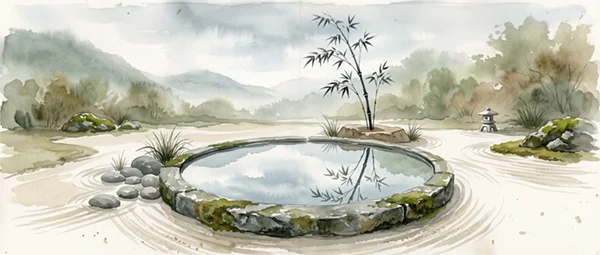
Up until now, you have been using your mind to observe things—your breath, your posture, or your bodily sensations. But today, the Great Physician asks us to turn the telescope around. We are going to use the mind to observe the mind itself.
Usually, we are completely fused with our thoughts and moods. If a wave of anxiety hits us, we don't just feel anxious; we become the anxiety. We say, "I am terrified." If frustration arises, we say, "I am furious." We drown in the river of our own mental states.
$Cittānupassanā$ is the practice of stepping out of the roaring river and sitting quietly on the bank to observe the water. The Buddha taught that we can observe the current state of the mind with total objectivity, noticing whether the mind is:
- Constricted (gripped by desire or anger) or Spacious (open and kind)
- Scattered (restless and drifting) or Concentrated (steady and focused)
- Sluggish (sleepy and heavy) or Alert (bright and awake)
You are not trying to force the mind to be quiet, nor are you judging yourself for having negative thoughts. You are simply holding up a mirror to the mind, exactly as it is in this moment.
The Metaphor of the Theatergoer
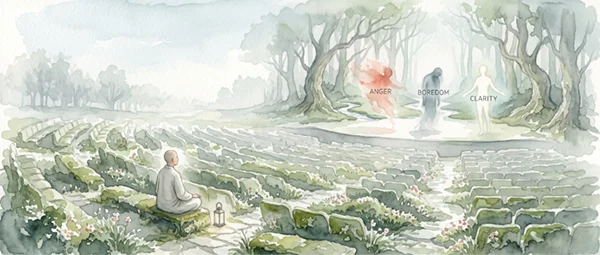
To understand this shift in perspective, imagine walking into a beautiful, dimly lit theater.
Instead of jumping up onto the stage, interrupting the actors, or getting into a fistfight with the villain, you take a comfortable seat in the center row. You sit back and simply watch the play unfold.
A character named "Anger" storms onto the stage, red-faced and shouting. You don't panic; you simply observe his performance. A few minutes later, Anger exits stage left, and a character named "Boredom" walks out, slouching and sighing. Eventually, Boredom leaves, and "Clarity" steps into the spotlight.
As a theatergoer, you don't declare that the theater itself is ruined just because a villain walked across the stage. You know that characters are transient—they enter, they play their part, and they inevitably leave. Your awareness is the spacious theater; your moods are merely the actors passing through.
From "I Am Angry" to "Anger Is Present"
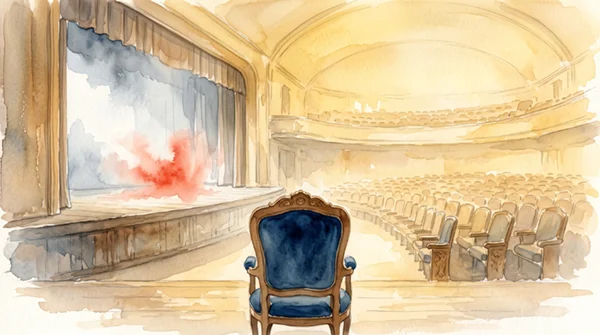
Let us look at how this subtle linguistic shift can entirely liberate you during a stressful day.
Imagine you are working under a tight deadline, and a teammate casually walks by your desk and drops a brand-new, massive task onto your pile. Instantly, a hot surge of irritation floods your chest.
If you are sleepwalking, you fuse with the actor. You think, "I am so angry right now. This is completely unfair." Because you believe you are the anger, you act it out—you snap at your colleague, slam your coffee cup down, and ruin your focus for the next two hours.
But look at what happens when you apply $Cittānupassanā$. You step back into your theater seat. You take a soft breath, observe the state of your mind, and gently say to yourself: "Ah, look at that. A state of irritation has just entered the mind."
Notice the profound magic in those few words. You did not say "I am irritated." You recognized that irritation is simply a temporary visitor passing through your spacious awareness. By uncoupling your identity from the emotion, you give it room to breathe—and because you aren't feeding it, the irritation naturally packs its bags and exits the stage.
Your Reflection Task for Today
Today, we are going to step out of the play and take our seats as the audience of our own minds.
The "Mental Climate Map" Practice: Three times today—perhaps mid-morning, right after lunch, and at the end of your day—pause for fifteen seconds, step back, and map the current climate of your mind. Ask yourself: "What character is on the stage right now?" Silently label it without a shred of judgment:
- "Ah, a restless mind is present."
- "Ah, a focused mind is present."
- "Ah, a tired, sluggish mind is present."
Simply witness the state of the mind, take a gentle breath, and let the play continue. You are the theater, not the actor. Go wisely into your day, and I will be waiting for you tomorrow.