28-Day Sanctuary · Session 12
Mindful Intent
Session 12 of the free Light of Dharma contemplative journey, combining Buddhist wisdom, daily-life reflection, and a gentle practice.
Welcome back, traveler. Take a seat, loosen any tightness in your body, and join me in taking a slow, grounding breath. We are moving through our second week together—the Path of Virtue —and today we explore the hidden engine behind all human behavior: our intention.
Day 12: The Power of Intention ($Sammā-saṅkappa$)
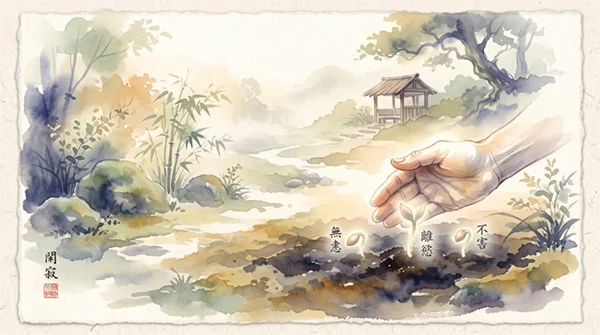
Many people believe that ethics are only about our external actions—what we do with our hands and what we say with our mouths. But the Buddha looked deeper. He taught that the mind is the architect of our reality. Before a single word is spoken or an action is performed, a seed is planted in the mind. That seed is intention, known in Pali as $Sammā-saṅkappa$ (Right Resolve or Right Intention).
Right Resolve is not about setting rigid goals or forcing yourself to be perfect. It is about actively shaping the climate of your heart. The Buddha beautifully distilled this training into three distinct resolves:
- The Resolve of Renunciation: This does not mean moving to a cave in the Himalayas. In daily life, it simply means the practice of letting go. It is the willingness to drop our attachments, our demands, and our rigid expectations of how things "should" be.
- The Resolve of Non-Ill Will: This is the cultivation of loving-kindness. It is the intentional choice to meet the world with goodwill rather than resentment, wishing that others (and ourselves) may be truly happy.
- The Resolve of Harmlessness: This is the cultivation of compassion. It is the deep commitment to navigate life without causing pain, actively wishing that all living beings be safe from suffering.
The Parable of the Muddy River
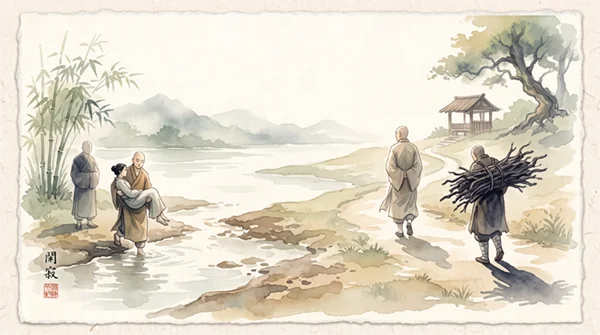
To understand the difference between carrying a physical burden and carrying a mental one, listen closely to this well-loved Zen story:
Two monks, Tanzan and Ekido, were walking along a country road made terribly muddy by a recent heavy rain. As they approached a bend, they encountered a beautiful young woman in a fine silk kimono. She stood at the edge of a deep, rushing puddle of mud, unable to cross without ruining her clothes. Without a word, Tanzan stepped forward, scooped the woman up into his arms, and carried her safely across the muddy waters, setting her down gently on dry land. She bowed in gratitude, and the monks continued on their journey. Ekido, however, was miserable. He walked in silence, brooding, his face growing darker by the mile. Hours passed, and the sun began to set. Finally, unable to contain himself any longer, Ekido burst out: "Tanzan! We are monks! We took strict vows never to touch a woman, let alone hold one in our arms! Why did you do that?" Tanzan stopped walking, looked at his companion with genuine surprise, and smiled gently. "My brother," Tanzan said, "I set that woman down hours ago at the river. Why are you still carrying her?"
The outer action was temporary, but Ekido’s inner mind was trapped in ill will and judgment, carrying a heavy burden across miles of dry land.
Carrying the Burden of Road Rage
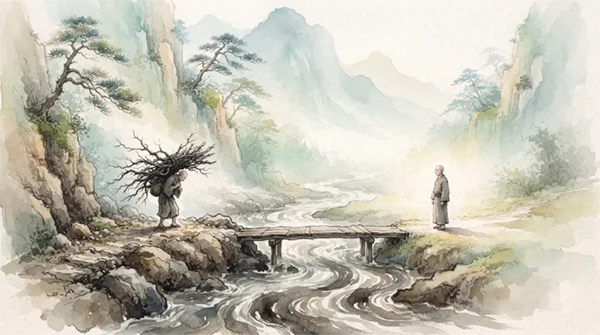
We cross our own muddy rivers every single day.
Imagine you are driving to work. Suddenly, a sports car darts across three lanes without signaling, cutting you off so sharply that you have to slam on your brakes. Your heart races. Anger surges.
At that exact moment, you have a choice of intention.
You could choose to hold onto the anger. You could tail the car, sound your horn angrily, or spend the next three hours complaining to your coworkers about "the absolute idiot on the highway." Like Ekido, you are now carrying that driver into your office, letting them ruin your morning long after the event has passed.
Alternatively, you can choose the resolve of letting go and harmlessness. You take a deep breath. You acknowledge that your heart is beating fast from fear. You look at the car speeding away and think, "Perhaps they are rushing to an emergency. May they arrive safely, and may I remain peaceful." You drop the burden right there on the asphalt. The driver didn't trap you; your own grip did.
Your Reflection Task for Today
Today, we practice laying down our heavy mental weights before they ruin our day.
The "Catch and Pivot" Practice: Today, pay close attention to your inner climate. The moment you catch a thought of ill will, annoyance, or judgment arising toward someone—a coworker, a family member, or a stranger in traffic—pause immediately. Don't fight the thought or scold yourself. Just recognize it, take one deep breath, and consciously pivot your intention by silently repeating: "I choose to let this go. May I be at peace, and may they be at peace."
Notice how your body softens when you refuse to carry the burden. Go lightly into your day.